Viola Yeşiltaç: An Almost Ideal City
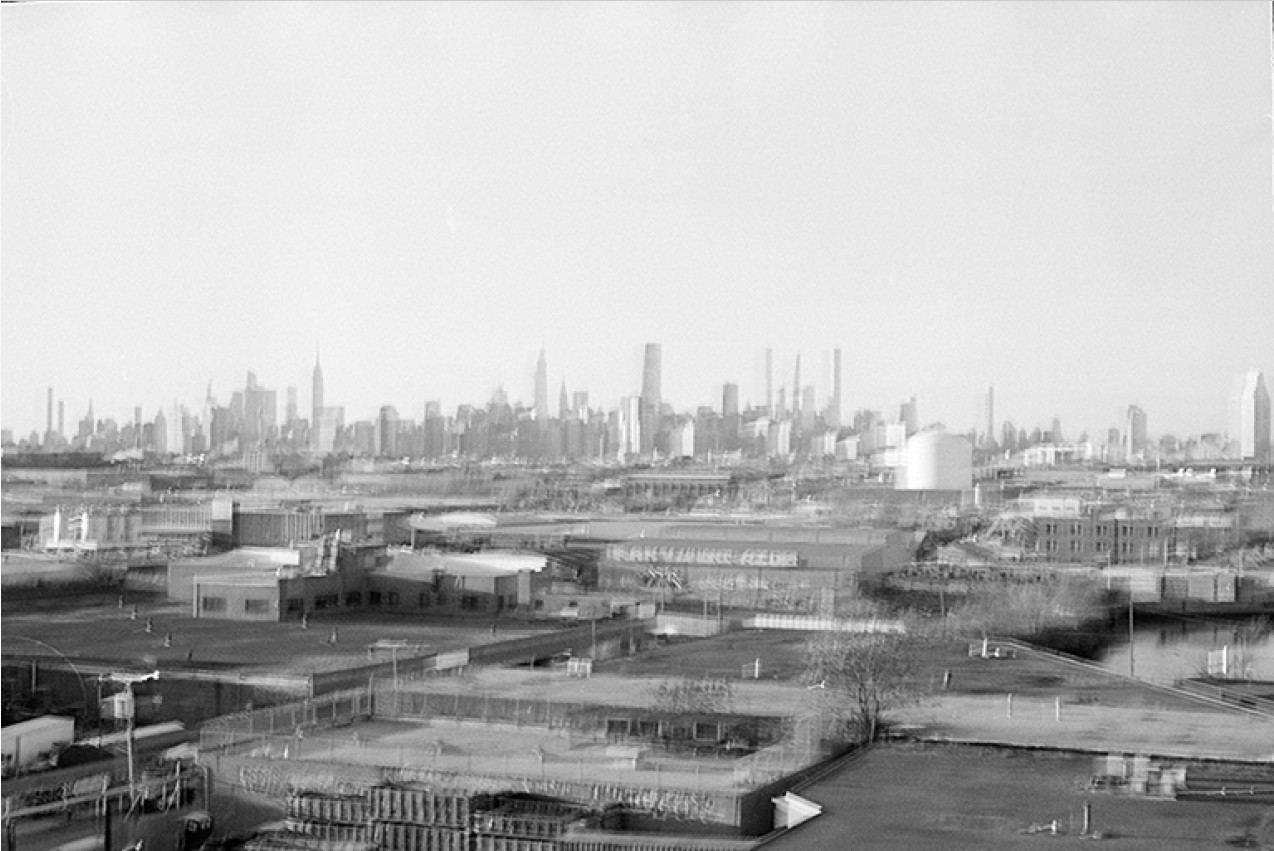
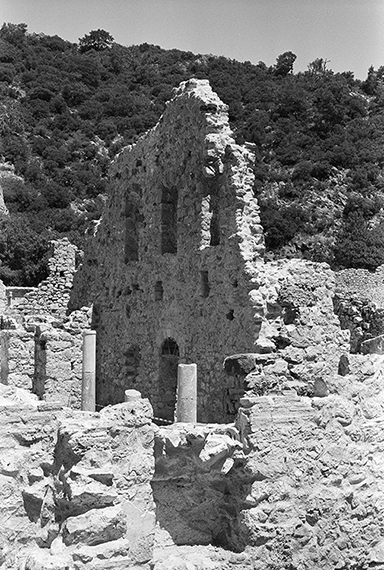
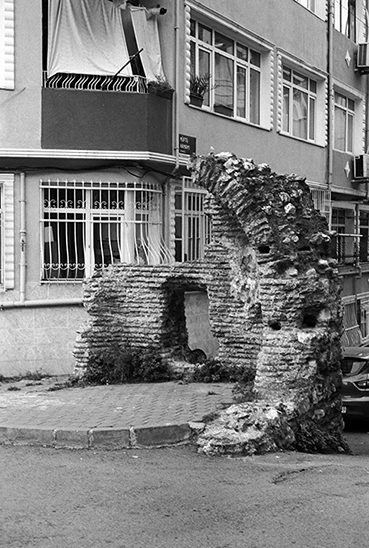
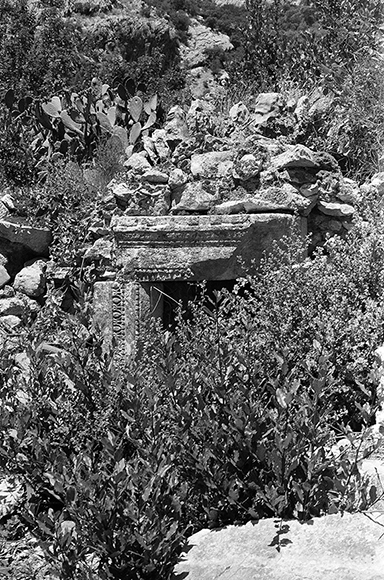
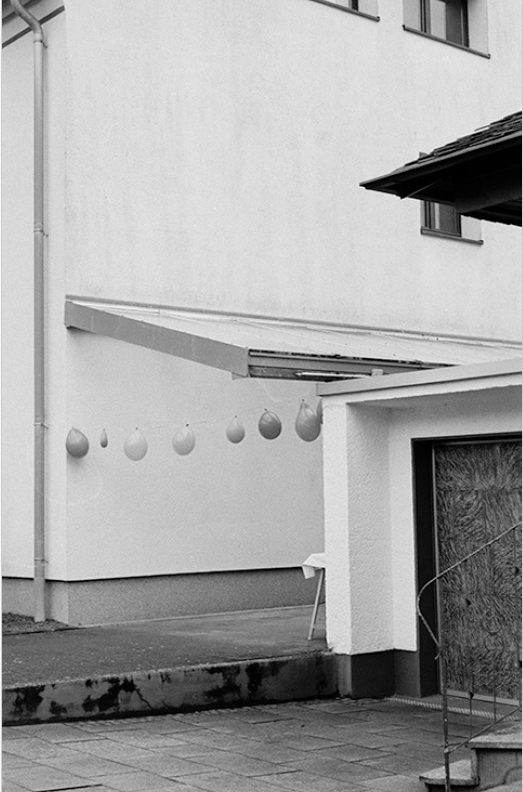
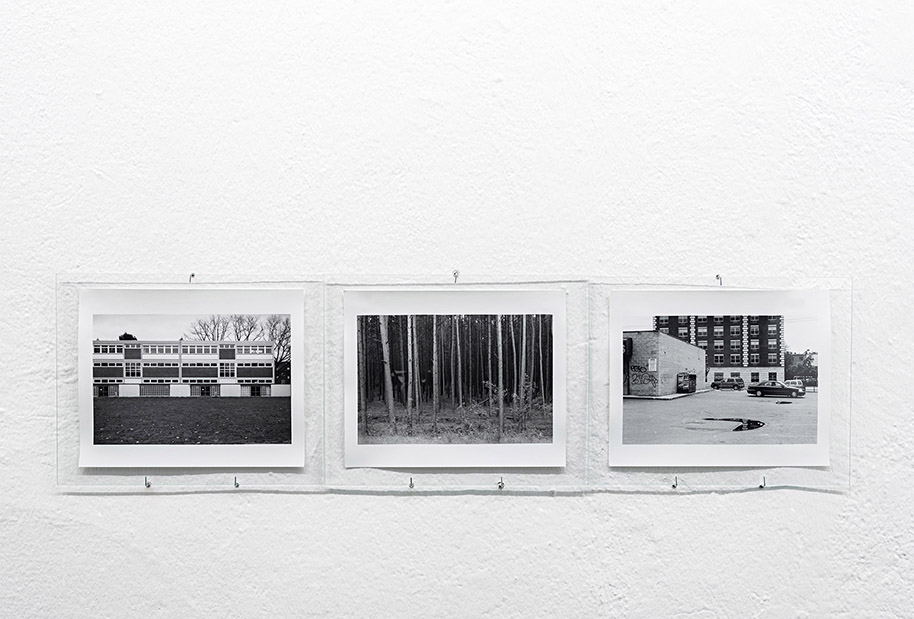
Viola Yeşiltaç’s photographic installation An Almost Ideal City (2026), presented at TenBerke Architects consists of 47 black-and-white silver gelatin prints (8 × 10 inches) and two sculptures, bringing different urban contexts into dialogue.
Corners of buildings, streets, niches, parks, coasts, and high-rises are photographed across various geographical locations. While site-specific details such as palm trees, signage, or architectural elements remain visible, the images avoid clichéd representations. Instead, they form a layered, almost supra-geographical urban space in which places such as Cologne, Istanbul, or American cities merge. Through their arrangement at different heights, the photographs enter into relation with one another, intertwining temporalities and revealing shared urban conditions.
“In the 15th century, during the Renaissance, Francesco di Giorgio Martini painted an ideal city […]
The viewer’s gaze is directed, between columns and along two streets, toward the harbor where the ships lie. The Roman Cicero, however, tended rather toward Plato’s view. He praised the wisdom of King Romulus, the mythical founder of Rome, for establishing the capital of the Roman Empire not on the seacoast but on the Tiber, a river that allowed access both to the sea and to the interior. Cicero, together with Aristotle, does acknowledge maritime trade, which brings forth a diversity of goods, as well as the nautical knowledge by which one can withstand storms and the sea.
Yet even more strongly, with Plato, he emphasizes the dangers that the sea poses for a coastal city: at the sea one is far more exposed to surprise attacks by enemies than inland; the way of life of the citizens becomes unstable through the influence of foreigners with their different values; “and then the inhabitants of these cities do not remain attached to their homes, but are, as it were, carried away on the wings of hope and in their thoughts ever farther from home, and even if they remain physically settled, they wander in their imagination abroad.” The temptations of the abundant supply of goods encourage an overly lavish way of life that harms the commonwealth; “and even the beauty of the seascape entices one to indulge in many elaborate and idle fantasies.” Coastal cities such as Corinth and Carthage, he argues, declined because agriculture and defense were neglected in favor of seafaring and trade. It may seem surprising how critically the educated Cicero judges the longing for distant places awakened by the sea, given that he himself greatly loved gazing out over it.”
(English translation of the original)
(Günter Scholtz, Philosophie des Meeres, Mareverlag, Hamburg 2016, S. 50–51)
About the Artist
Viola Yeşiltaç was born in Hanover, Germany. She is a German artist of Turkish descent who lives and works in Brooklyn and Cologne, Germany. Yeşiltaç’s practice considers a range of socio-cultural issues, such as migration, through the lens of her personal history. She reflects intensively on the idiosyncrasies of places in her conceptually-driven works, which she does in a diverse range of media. Her work has been exhibited at The Meeting, New York, NY this year that was reviewed in the New York Times.
Selected recent solo exhibitions include Kunstverein Springhornhof, Neuenkirchen, Germany (2023); Kunst an Kölner Litfaßsäulen, Cologne, Germany (2022); Kunsthaus Rhenania, Cologne, Germany (2020); and Fondazione Brodbeck, Catania, Italy (2018).
Viola received her MFA in photography from the Royal College of Art, London, U.K. 2007, and she received her BA from the School of Fine Arts, Braunschweig, Germany, 2005. She was also a mentee of the photographer Michael Schmidt, 2000-2005.